
Skip to content

I build teams that ship things no one could build alone.

Twenty years in, the most important thing I've learned is that the best design leaders aren't the best designers in the room. They're the ones who make the room better. I've done that by staying close to the work, staying honest about what's broken, and being willing to change how we work when the old way stops serving us.

Point of view

I came up as a maker. Designer and developer, two disciplines that rarely share a brain. That background shaped everything about how I lead, because I've never been able to separate how something looks from how it gets built.

The shift toward leadership happened gradually, then all at once. I realized I could have more impact by improving how a team thinks than by improving a single design. That's the job. Not executing the vision, but building the conditions where great work is inevitable.

AI has made that more interesting than ever. The question isn't which tools to adopt. It's how to help a team evolve its thinking so the tools actually make the work better.

When people ask what matters most, I point to two things: compassion and intent.

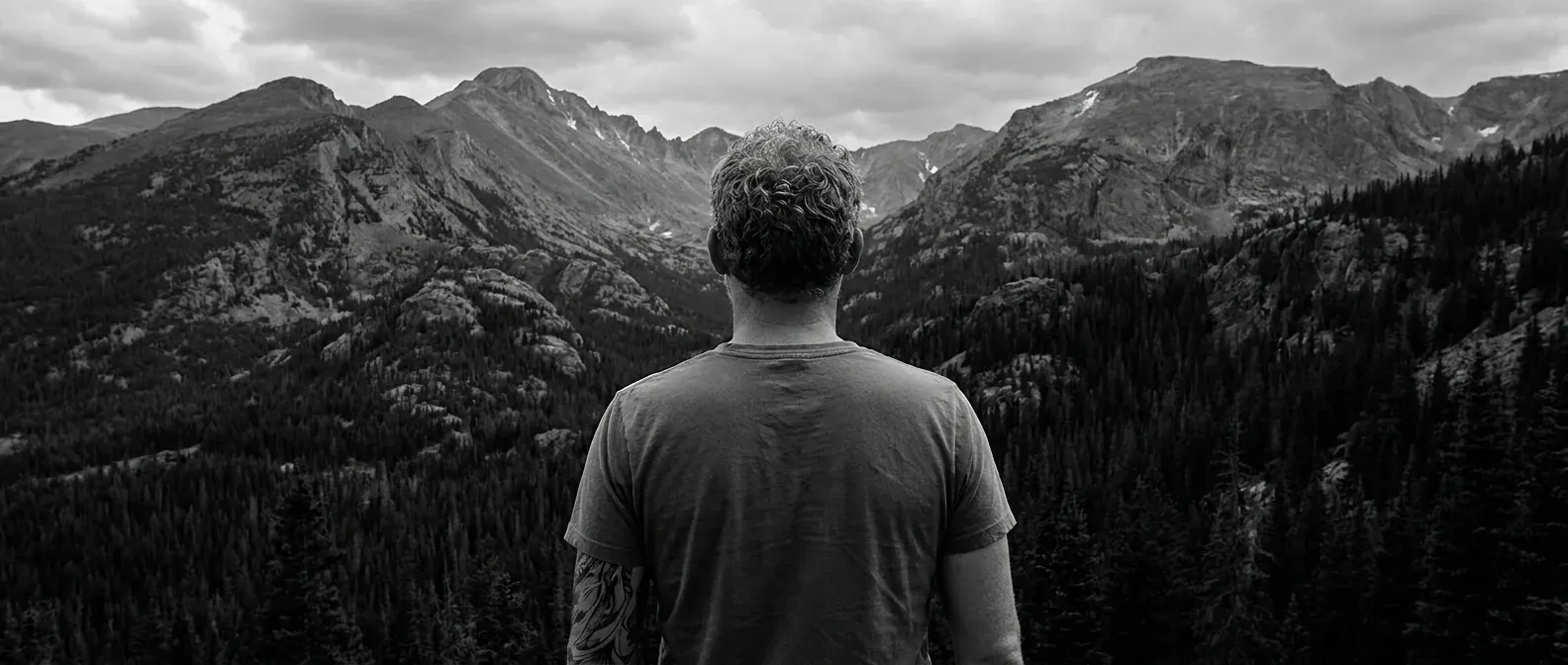
Looking out across a mountain range from a high ridgeline

How I lead

  • Stay close to the work

    I don't manage from a distance. I'm in Figma, in the code, in the weeds with the team. That proximity is what makes feedback land and decisions stick.

  • Challenge the process before the pixels

    Most design failures are process failures. If the work isn't good, I look at how we're working before I look at what we shipped.

  • Make AI a team sport

    I don't hand down tools. I experiment alongside the team, share what's working, and build shared fluency together. Adoption sticks when it feels like an upgrade, not a mandate.

  • Lead with compassion

    Skip the performance reviews and box-checking. Have real human connections and conversations instead. AI has data-ized enough of our lives — let's not let it muck with our relationships with employees. At the end of the day, 99% of people want to be successful at their jobs and happy. Lean into that.

  • Lead with intent

    Be intentional. Ambiguity is dishonest. If a designer presents something and the layout or typography isn't working, don't say “it's okay” — call it out, respectfully. “It's okay” creates uncertainty and isn't fair to them. This applies everywhere: work, life, relationships. Clarity is a gift.

In practice

Tribute · 2025 · Process & team transformation

Rethinking what a design system actually is

Most design systems live in Figma. Ours used to. When we began Tribute's full platform replatform, I made a call that changed how my entire team works: we were cutting Figma out of the critical path and building a design system rooted in AI and rapid prototyping, where the deliverable wasn't a static file. It was functioning code.

The team of four was skeptical at first. That's a fair reaction when you're asking designers to change the most fundamental part of their workflow. But I stayed close to the work, experimented alongside them, and compressed our sprint cycles down to one week by combining Lean UX and traditional Agile across product, design, and engineering simultaneously.

Within a few sprints, something shifted. The feedback loops got tighter. Stakeholders were reacting to real, working product instead of mockups. Decisions that used to take weeks were getting made in days. The reluctance disappeared because the results were undeniable.

Team of 4 went from skeptical to thriving. One-week sprint cycles became the new normal. The system now ships production-ready components, not handoffs.

Peterson's · 2020 · Cross-timezone execution

A 4.6-star app built across two continents

When Peterson's decided to build a test prep app, the timeline was aggressive and the team was distributed. I was leading design and frontend in Denver while our engineering team was based in Ukraine. Asynchronous by necessity, high-stakes by design.

What could have been a coordination nightmare became one of the most efficient projects I've ever run. We established clear async rituals, kept design decisions documented and visible, and used the timezone gap to our advantage. By the time Denver woke up, Kyiv had already pushed code. By the time Kyiv signed off, we had new designs waiting.

I worked directly with the CEO and CTO throughout, which kept decisions fast and alignment tight. There was no middle layer to slow things down. When something needed to change, it changed the same day.

Shipped in under 3 months. 4.6-star App Store rating, 10,000+ downloads, and featured by Apple in its first week.

How I work

I take a pragmatic, adaptable approach to design informed by design thinking and Lean UX. I don't believe in a single “right” process — effective design depends on the problem, the team, and the constraints.

For small teams, I favour a fast Think, Make, Check loop that prioritises speed and collaboration. In larger organisations, I'm comfortable working within more structured processes that support deeper research, validation, and alignment, always with the goal of shipping meaningful work efficiently.

And it's not one-size-fits-all.

  1. 01

    Research

    Establishing why

    The Research Phase is where we identify the purpose for all the decisions we will eventually make. At this point, I determine goals and outcomes and challenge assumptions, using user research, mental models, and storyboards to help define how users think. The primary goal is to first figure out what users want and why they want it — this forms the basis for all our future design decisions.

    PlaybookUX, Userbrain, Dovetail, Maze

  2. 02

    Ideate

    Explore and expand options

    In Ideation, we brainstorm and collaborate to explore possibilities through various exercises. Ideation may need to be streamlined to meet the needs of a startup project, but it is critical for more complex, larger initiatives. Design sprints, either with fellow designers or stakeholders, are central to this stage. We use techniques such as How Might We, Crazy 8s, and Spicy Debates to generate multiple possible solutions. These exercises take up significant time, but they give us numerous ways to innovate and force us to rethink how we traditionally design.

    Mural, Miro

  3. 03

    Make

    Realizing our vision

    In the Make Stage, we transform our ideas into tangible products — my favourite part of the design process. Based on our findings from the Research Phase, we begin forming hypotheses and developing our products. Whether we are working in Figma or rapidly prototyping using modern tools, this is where the product takes shape and comes alive. As a designer, I can express my creativity at this stage while also making meaningful contributions to the end product.

    Figma, Bolt, v0

  4. 04

    Check

    Ongoing improvement

    The Check Phase is the core of my design process — it's where we validate our assumptions and continuously refine the work through user testing and data analysis. This continues long after the design is complete. Occasionally we discover that our data-backed assumptions were wrong, or that users reacted badly to some part of the product. That is exactly why the Check Phase matters: it hands us real-world opportunities for growth. Whether we are taking a 25% conversion rate to 50% or fine-tuning flows on user feedback, this is where we measure whether the design actually served anyone.

    PostHog, GA4

Experience

Request a PDF
  1. 2021–Present

    Head of Product Design

    Tribute

    • Led the platform redesign behind 20× growth in two years
    • Built a tokenized design system and shipped TypeScript applications
    • Folded research, A/B testing and analytics into the loop, up to 30% conversion gains
    • Ran a six-month acquisition integration
    • Built and launched two native iOS apps
    • Consolidated three PM systems into one workflow
  2. 2015–2021

    Sr. Manager, UX/UI Design & Frontend Development

    Peterson's

    • Led design and frontend across web and mobile products
    • Launched a mobile app: 4.6 stars, 10,000+ downloads, 90%+ positive reviews
    • Redesigned LMS workflows off the back of usability testing
  3. Dec 2019–Mar 2020

    Product Design & Development Consultant

    Droplr

    • Grew organic traffic 115%
    • Hit a 98/100 Lighthouse score on a custom WordPress Multisite
  4. 2017–2019

    Product Design & Development Consultant

    ETHDenver

    • 96% CSAT across the event platform
  5. 2014–2017

    Product Design & Development Consultant

    Inspirato

    • Acquired 4,000+ members for the Amex joint venture
  6. 2011–2014

    Staff Designer / Engineer

    Webolutions

    • Delivered 15+ client websites
    • Two Communicator Awards
  7. 2006–2011

    Lead Interactive Designer

    Miles Partnership

    • Led interactive design for 10+ tourism brands
    • Directed the Colorado.com redesign
  8. 2007–2009

    Technical Specialist

    Apple

    • Hardware and software consultation

Breakout

Portfolio computer system

Game program

66 Bricks
to clear

  • One player
  • No continues
  • Overlays the page
  • Clear all 66 to win

Adam Robertson AR‑2026