Leadership Philosophy

I build teams that ship things no one could build alone.

Twenty years in, the most important thing I've learned is that the best design leaders aren't the best designers in the room. They're the ones who make the room better. I've done that by staying close to the work, staying honest about what's broken, and being willing to change how we work when the old way stops serving us.

Point of view

I came up as a maker. Designer and developer, two disciplines that rarely share a brain. That background shaped everything about how I lead because I've never been able to separate how something looks from how it gets built.

The shift toward leadership happened gradually, then all at once. I realized I could have more impact by improving how a team thinks than by improving a single design. That's the job. Not executing the vision, but building the conditions where great work is inevitable.

AI has made that more interesting than ever. The question isn't which tools to adopt. It's how to help a team evolve its thinking so the tools actually make the work better.

When people ask what matters most, I point to two things: compassion and intent. Together they're the foundation everything else sits on.

Stay close to the work

I don't manage from a distance. I'm in Figma, in the code, in the weeds with the team. That proximity is what makes feedback land and decisions stick.

Challenge the process before the pixels

Most design failures are process failures. If the work isn't good, I look at how we're working before I look at what we shipped.

Make AI a team sport

I don't hand down tools. I experiment alongside the team, share what's working, and build shared fluency together. Adoption sticks when it feels like an upgrade, not a mandate.

Lead with compassion

Skip the performance reviews and box-checking. Have real human connections and conversations instead. AI has data-ized enough of our lives—let's not let it muck with our relationships with employees. At the end of the day, 99% of people want to be successful at their jobs and happy. Lean into that.

Lead with intent

Be intentional. Ambiguity is dishonest. If a designer presents something and the layout or typography isn't working, don't say "it's okay"—call it out, respectfully. "It's okay" creates uncertainty and isn't fair to them. This applies everywhere: work, life, relationships. Clarity is a gift.

Leadership Moments

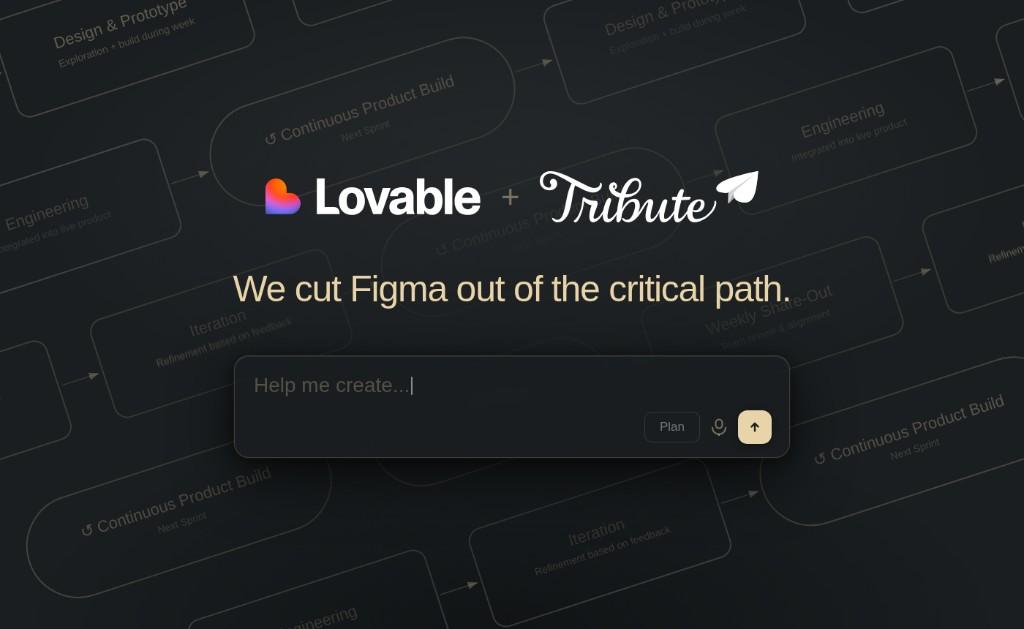
Lovable + Tribute: We cut Figma out of the critical path.
Tribute · 2025

Process & Team Transformation

Rethinking what a design system actually is

Most design systems live in Figma. Ours used to. When we began Tribute's full platform replatform, I made a call that changed how my entire team works: we were cutting Figma out of the critical path and building a design system rooted in AI and rapid prototyping where the deliverable wasn't a static file. It was functioning code.

The team of four was skeptical at first. That's a fair reaction when you're asking designers to change the most fundamental part of their workflow. But I stayed close to the work, experimented alongside them, and compressed our sprint cycles down to one week by combining Lean UX and traditional Agile across product, design, and engineering simultaneously.

Within a few sprints, something shifted. The feedback loops got tighter. Stakeholders were reacting to real, working product instead of mockups. Decisions that used to take weeks were getting made in days. The reluctance disappeared because the results were undeniable.
Team of 4 went from skeptical to thriving. One-week sprint cycles became the new normal. The system now ships production-ready components, not handoffs.
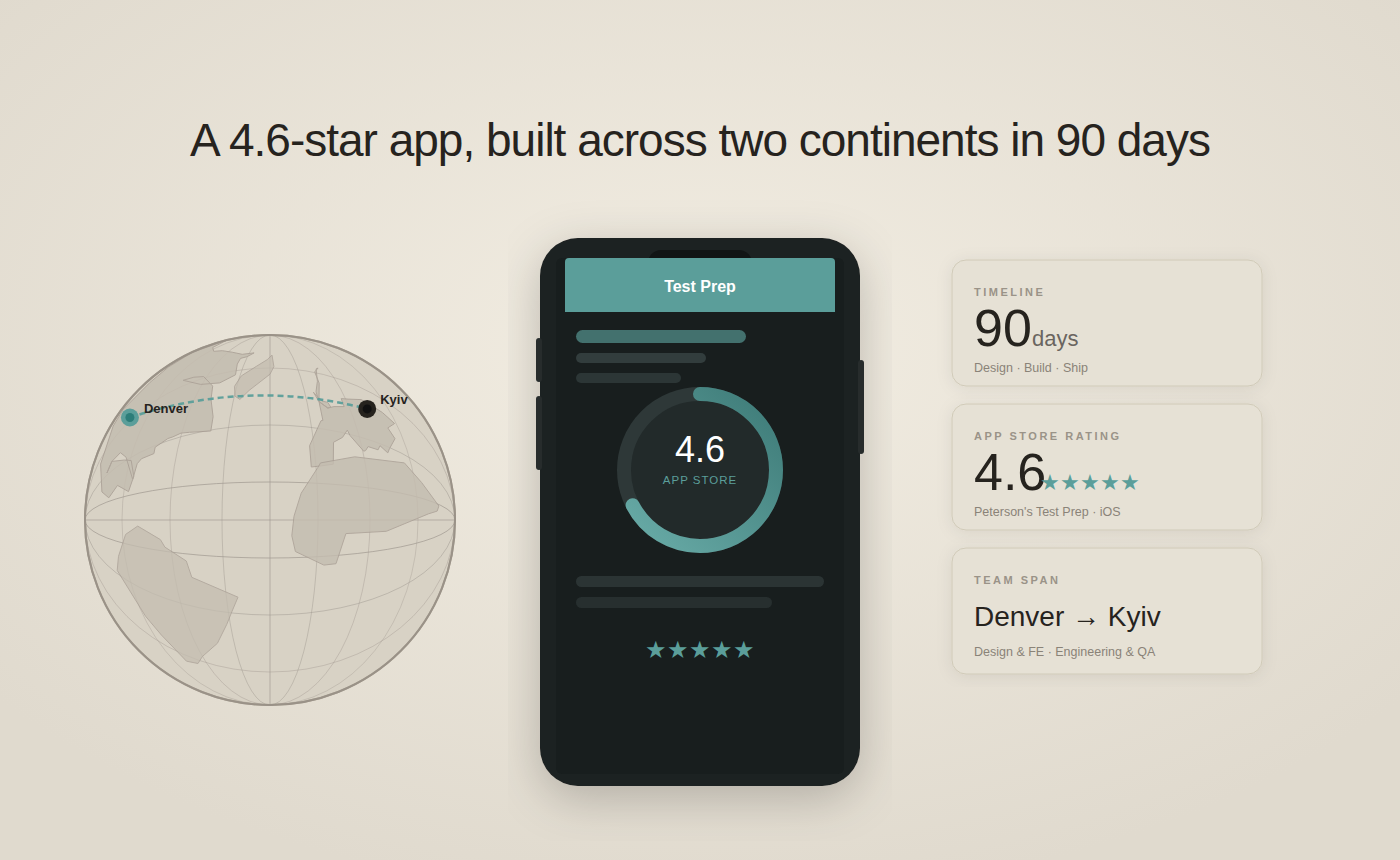
A 4.6-star app, built across two continents in 90 days.
Peterson's · 2017

Cross-Timezone Execution

A 4.6-star app, built across two continents in 90 days

When Peterson's decided to build a test prep app, the timeline was aggressive and the team was distributed. I was leading design and frontend in Denver while our engineering team was based in Ukraine. Asynchronous by necessity, high-stakes by design.

What could have been a coordination nightmare became one of the most efficient projects I've ever run. We established clear async rituals, kept design decisions documented and visible, and used the timezone gap to our advantage. By the time Denver woke up, Kyiv had already pushed code. By the time Kyiv signed off, we had new designs waiting.

I worked directly with the CEO and CTO throughout, which kept decisions fast and alignment tight. There was no middle layer to slow things down. When something needed to change, it changed the same day.

Shipped in under 3 months. 4.6-star App Store rating, 10,000+ downloads, and featured by Apple in its first week.